WRITTEN BY // TAYLAH CROME
PUBLISHED: MARCH 2026
The way brands show up in physical spaces is evolving rapidly in 2026. Across exhibitions, brand activations, and retail environments, there is a clear shift from static displays to immersive, high- impact experiences designed to capture and hold attention and we are here to break down the global trends.
At EuroShop, this evolution was impossible to ignore. Our team made the journey to Germany once again this year to attend the one of the largest trade fairs for the retail sector, showcasing the latest retail technologies and trends. In comparison to 2023, the level of design thinking, creativity, and execution has significantly progressed — with every space more considered, more engaging, and more competitive than ever before.
What emerged wasn’t just a collection of trends, but a clear direction for the future: environments that are experiential, flexible, sustainable, digitally integrated, and visually unforgettable. We’ve collected 5 key global trends from the tradeshow that highlight how leading brands are rethinking physical spaces — and what it takes to create environments that truly connect with audiences today.
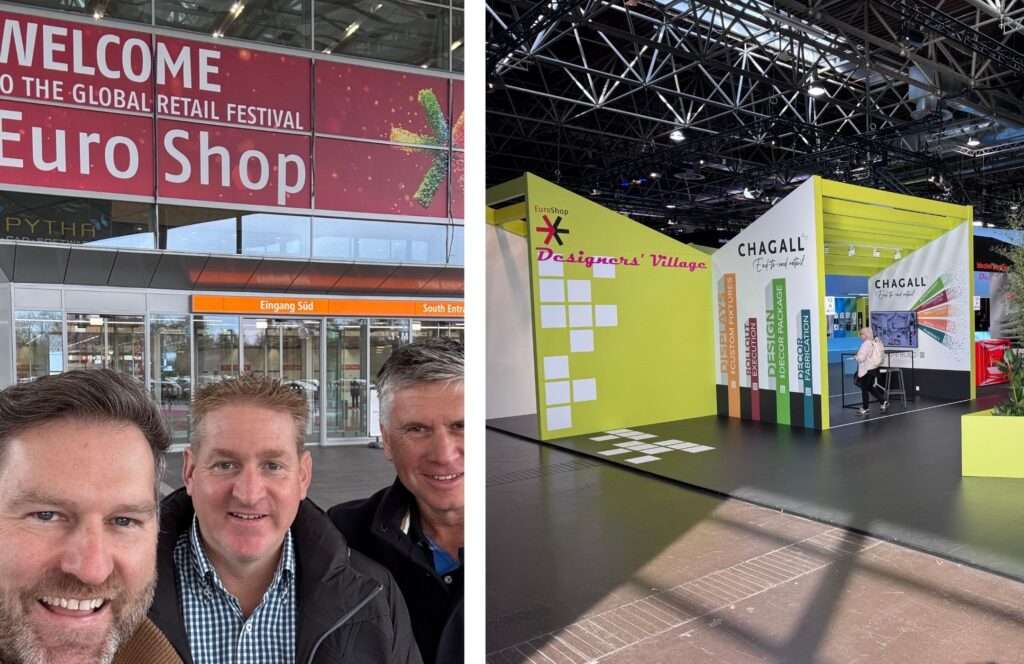
Dylan Retif, CEO, commented on his experience this year, highlighting the marked global trends evolution of the show and the industry as a whole;
“EuroShop 2026 really showed how far the industry has come since 2023 — the level of design, detail and overall experience has completely lifted. The energy across the floor felt more like Times Square than a traditional exhibition, with every brand competing for attention. That level of engagement is where the future is heading.
But what hasn’t changed is what matters most – personalised experiences which is what DisplayWise knows and has built over the past 25 years. The brands that stood out were the ones that combined great design with meaningful human interaction. “
Trend 1: Experiential Environments – From Displays to Destinations
In 2026, exhibitions and brand activations are no longer built to be seen – they’re built to be experienced. At EuroShop, the shift was clear: static stands have been replaced with immersive, multi-layered environments designed to capture attention and hold it.
Double-level builds, integrated lighting, textured finishes, and bold colour choices created spaces that felt more like destinations than displays. Compared to previous years, the level of thought and execution has evolved significantly with every stand competing for attention in a way that felt closer to the alluring, high-energy of Times Square than a traditional exhibition floor.
Experiential design isn’t about scale alone — it’s about how people move through, interact with, and remember a space. Brands that prioritise this approach are creating deeper engagement and stronger recall.
KEY EXPERIENTIAL DESIGN CONSIDERATIONS
- Movement drives engagement — multi-level builds, arches, and layered layouts encourage exploration rather than passive viewing.
- Colour captures attention — Bold palettes aren’t just a visual trend, they’re a strategic tool. By leveraging colour psychology, brands can influence emotion, capture attention, and guide behaviour within a space.
- Texture creates depth — materials like cardboard, paper, paint, and fabric layering add a tactile, human element.
- Lighting shapes perception — integrated LED lighting within floors, walls, and structures creates immersive atmospheres.
- Personalisation builds connection — tailored interactions, guided by staff or tech, make experiences more meaningful and memorable.

Trend 2: Modular Design – Building for Flexibility and Scale
Exhibitions and activations are becoming more dynamic, and the environments supporting them need to keep up. At EuroShop, modularity wasn’t just a construction method — it was a creative strategy.
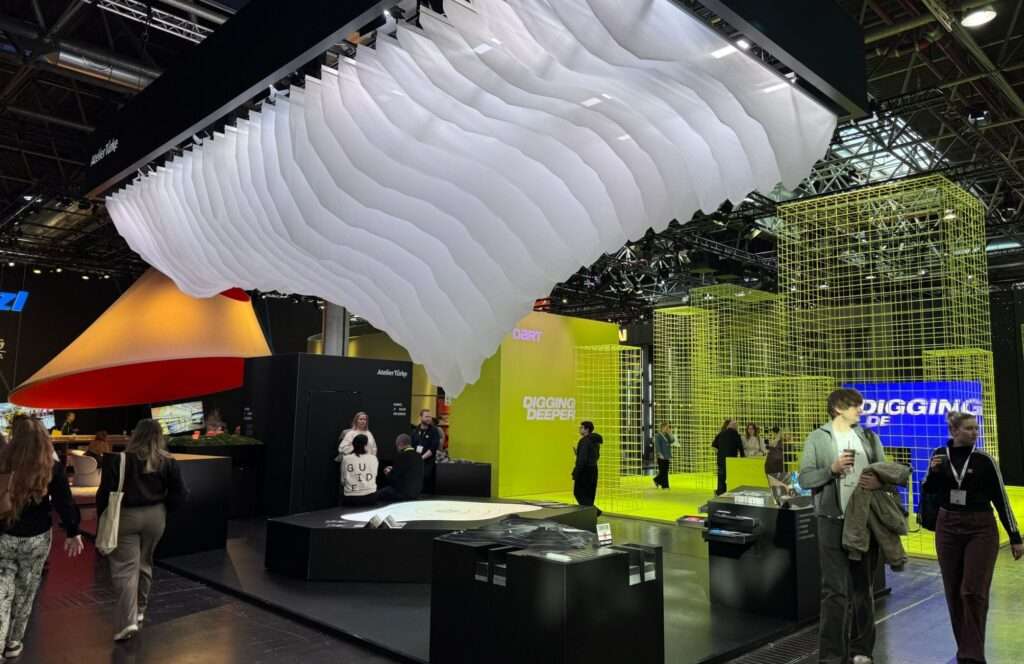
From rigging systems to metal lattice frameworks and LED edge-lit flooring, brands are building spaces that can be reconfigured, scaled, and adapted across multiple campaigns and locations. The shift toward modular systems reflects a broader need: to create high-impact environments that are also efficient, reusable, and on-trend this year.
Modular doesn’t mean uniform. It’s a foundation for fully custom-built experiences—where systemised design enables greater creative freedom, not less. By combining bespoke design thinking with adaptable frameworks, brands can deliver unique, high-impact environments that feel tailored to each audience, while still benefiting from the efficiency and sustainability of a considered system.
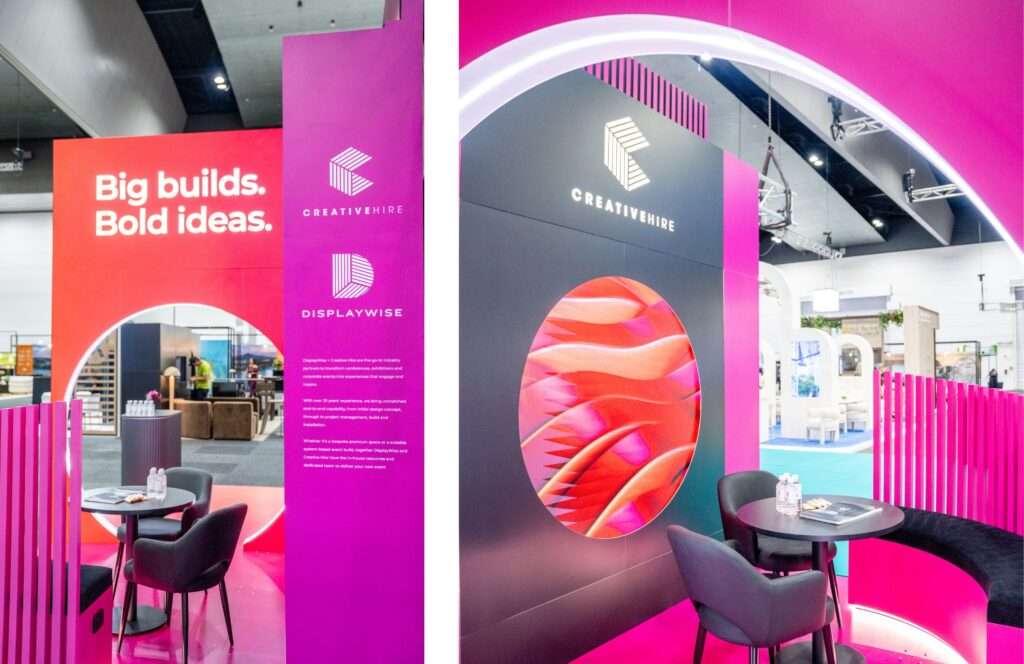
PROJECT SPOTLIGHT: DisplayWise + Creative Hire at AIME 2026
AIME 2026 highlighted a clear shift in the exhibition landscape, where success is defined not just by presence, but by experience, connection, and measurable impact. The collaboration between DisplayWise and Creative Hire showcased a shared vision to help clients rethink what’s possible through bold ideas, scalable builds, and fully integrated delivery. Read more in our latest AIME Wrap Up.
KEY MODULAR DESIGN CONSIDERATIONS
- Adaptability extends lifespan — structures that can be reused across campaigns reduce cost and waste.
- Layering enhances flexibility — sheer fabrics and semi-transparent materials allow quick visual updates.
- Rigging unlocks scale — overhead structures and suspended elements maximise space and visibility.
- Integrated flooring matters — LED edge-lit floors and mock surfaces become part of the
- storytelling, not just the base.
- Scalability supports growth — modular systems allow brands to expand or reduce footprint depending on the type of event.
Want a quick chat? We guarantee you’ll hear back in less than 60 minutes*
Trend 3: Sustainable Systems – Designing with Intent
Sustainability is no longer an add-on — it’s a no-brainer into how exhibition and brand activation spaces are designed. At EuroShop 2026, sustainable thinking showed up not just in materials, but in systems, processes, and longevity as consistent global trends.
Rather than single-use builds, brands are investing in reusable frameworks, lightweight
materials, and layered finishes that reduce environmental impact without compromising creativity. Most importantly, sustainability is being used as a design advantage, not a limitation but enabling more thoughtful, efficient, and innovative outcomes.
For more insights on material trends this year, check out our latest article on 6 Materials Trends for Exhibition and Pop Up Displays in 2026.
KEY SYSTEM DESIGN CONSIDERATIONS
- Reuse reduces waste — modular and repeatable systems minimise the need for new builds.
- Material choice matters — cardboard, paper, and stretch fabrics offer both sustainability and visual impact.
- Lightweight design improves efficiency — easier transport and install reduces environmental footprint.
- Integrated design minimises excess — combining flooring, lighting, and structure avoids unnecessary materials.
- Transparency builds trust — visible sustainable choices strengthen brand credibility with audiences.

Trend 4: Digital Integration – Content Becomes the Experience
Digital screens are no longer just displays — they are central to the environment itself. At EuroShop, LED content, curved screens, and multi-level digital installations were used to create movement, storytelling, and real-time engagement.
What stood out most in the global trends forecast was the quality and curation of content. It wasn’t just about having screens — it was about using them effectively to guide attention and enhance the physical space. AI is also beginning to play a role, helping tailor experiences, support sales interactions, and create smarter, more responsive environments.
Level-up your next display project with our latest article on 6 ways to integrate our next-generation LED panels because we’ve got the tech, all you need to do is bring you brand story.
KEY DIGITAL DESIGN CONSIDERATIONS
- Content drives impact — high-quality, curated visuals are essential to cut through and hold attention.
- Screens should be embedded — digital elements work best when integrated into structures, not added on.
- Curves and scale create immersion — large, curved, and multi-angle screens enhance visibility and engagement.
- AI enhances interaction — personalised content and insights can support both engagement and conversion.
- Balance is key — digital should amplify physical design, not overpower it.
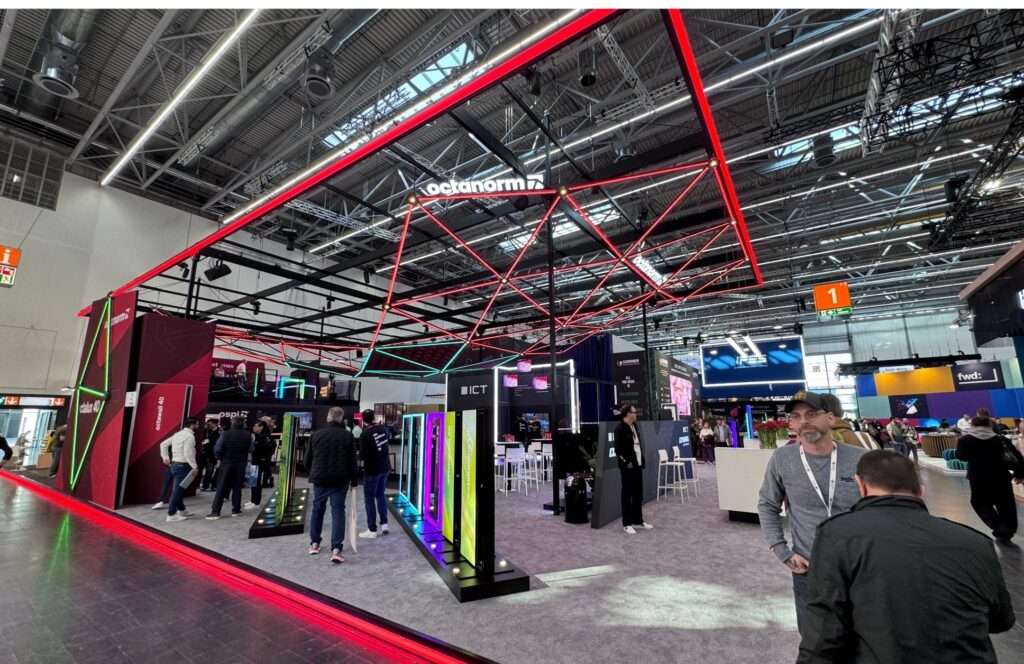
Trend 5: Visual Storytelling at Scale – Competing for Attention
Across exhibitions and activations, one thing was clear: attention is the most valuable currency. Every stand was designed to stop people in their tracks — using scale, colour, lighting, and structure to stand out instantly.
This trend has pushed visual storytelling to new heights. From edge-lit floors to bold structural forms and layered materials, environments are being designed to communicate a message within seconds.
KEY VISUAL DESIGN CONSIDERATIONS
- First impressions happen fast — bold visuals and lighting must capture attention.
- Scale amplifies presence — larger structures and vertical builds dominate crowded spaces.
- Consistency builds clarity — colour, material, and form should align with brand identity.
- Movement attracts focus — lighting changes, digital content, and kinetic elements create
- Design for memory — the goal isn’t just to be seen, but to be remembered.
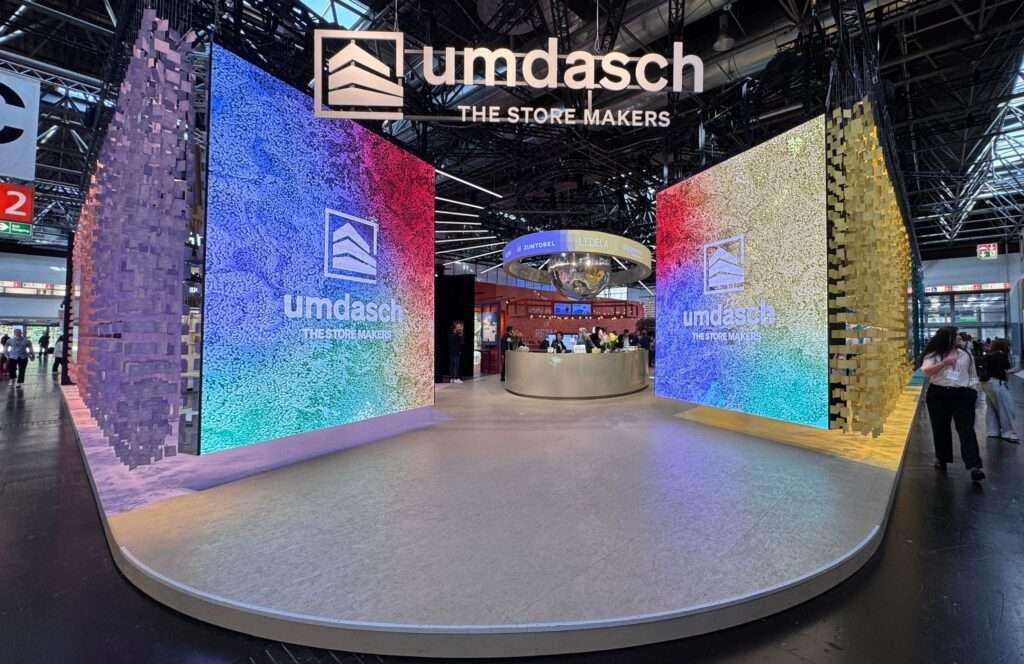
As exhibitions and brand activations become increasingly competitive, the expectation is clear: brands must do more than show up — they need to engage, inspire, and create lasting impressions.
What stood out most for the DisplayWise team from EuroShop 2026 wasn’t just the scale or creativity — it was the intent behind every detail. The most effective spaces weren’t necessarily the biggest, but the ones that successfully combined experience, adaptability, technology, and storytelling into a cohesive environment.
For brands looking to stand out, the opportunity lies in turning physical spaces into experiences people don’t just visit but remember. These trends signal a shift towards more thoughtful, strategic design — where every element has a purpose, and every interaction is considered.
Ready to bring the next 2026 trends to life? Contact our team to your next brand moment to life.